
Resources & Position Papers
Climate Change and Environmental Impact
Climate Change and Environmental Impact
Refrigerant safety
EFCTC response to EURACTIV article
Reacting to the recent article in EURACTIV “Key EU lawmaker: Europe ‘needs to stay ahead of the game’ on heat pump manufacturing”, EFCTC would like to emphasize that propane is not a ‘natura...
Learn About
An inventory of fluorspar production, industrial use, and emissions of trifluoroacetic acid (TFA) in the period 1930 to 1999
Full paper available for download ...
EFCTC Position Papers
Neuer Vorschlag der EU-Kommission zur Überarbeitung der F-Gas-Verordnung sieht einen schnelleren Ausstieg aus fluorierten Kältemitteln vor
Brüssel/ Nürnberg, 10. Oktober 2022 – In einer Zeit, in der sich Europa auf die Sicherung der Energieversorgung und auf eine beschleunigte Transformation hin zur Klimaneutralität konzentriert, ha...
EFCTC Position Papers
SOCIO-ECONOMIC ANALYSIS OF THE VALUE OF F-GASES
This study has been commissioned by the European FluoroCarbons Technical Committee (EFCTC) to provide an independent Socio-Economic Analysis (SEA) of the contribution of the fluorinated greenhouse gas...
EFCTC Position Papers
Supporting Sustainable Ambition and Stronger Enforcement of the F-gas Regulation to Promote Europe’s Transition Towards Decarbonization
The European FluoroCarbons Technical Committee (EFCTC), representing producers and suppliers of HFCs, HFOs and HCFOs, fully supports the objectives of the F-gas Regulation. Specifically, EFCTC recogni...
EFCTC Position Papers
The case for a large natural source of TFA in the oceans is extremely strong, well- documented, and scientifically supported.
The large body of scientific data shows that anthropogenic sources are not responsible for the majority of TFA in the oceans.
Click below to read the EFCTC Position paper.
Should you have commen...
EFCTC Position Papers
The European Fluorocarbons Technical Committee (EFCTC) welcomes the report on Fluorinated greenhouse gases 2021 published today by the European Environment Agency.
The European Fluorocarbons Technical Committee (EFCTC) welcomes the publication of a new report by the European Environment Agency on fluorinated greenhouse gases. The Fluorinated Greenhouse Gases 202...
EFCTC Position Papers
Published evidence supports very low yields of TFA from most HFOs and HCFOs
Summary
EFCTC has analysed the most current, peer reviewed scientific papers on the potential contribution of HFOs and HCFOs, containing the CF3CH= moiety, to existing and future TFA levels. The co...
EFCTC Position Papers
EFCTC ready to continue assisting in building robust and comprehensive data sets for the PFAS Registry of Intentions for a REACH restriction
EFCTC notes the publication of the Registry of Intentions for a REACH- restriction by Denmark,
Germany, the Netherlands, Norway, and Sweden and looks forward to working with the authorities
to ensur...
EFCTC Position Papers
Refrigerant Degradation: Is HFC-23 (CF3H) formed due to the decomposition of HFOs and HCFOs in the troposphere?
HFOs and HCFOs that contain the CF3CH= group breakdown in the atmosphere to give CF3CHO (trifluoroacetaldehyde) as an intermediate product. The main final breakdown products of HFOs containing the CF3...

Infographics
Refrigerants : The Cold Numbers
When it comes to the impact of refrigerants on the environment, you can find lots of data but much is used out of context. Here are some of the facts put in perspective....
Infographics
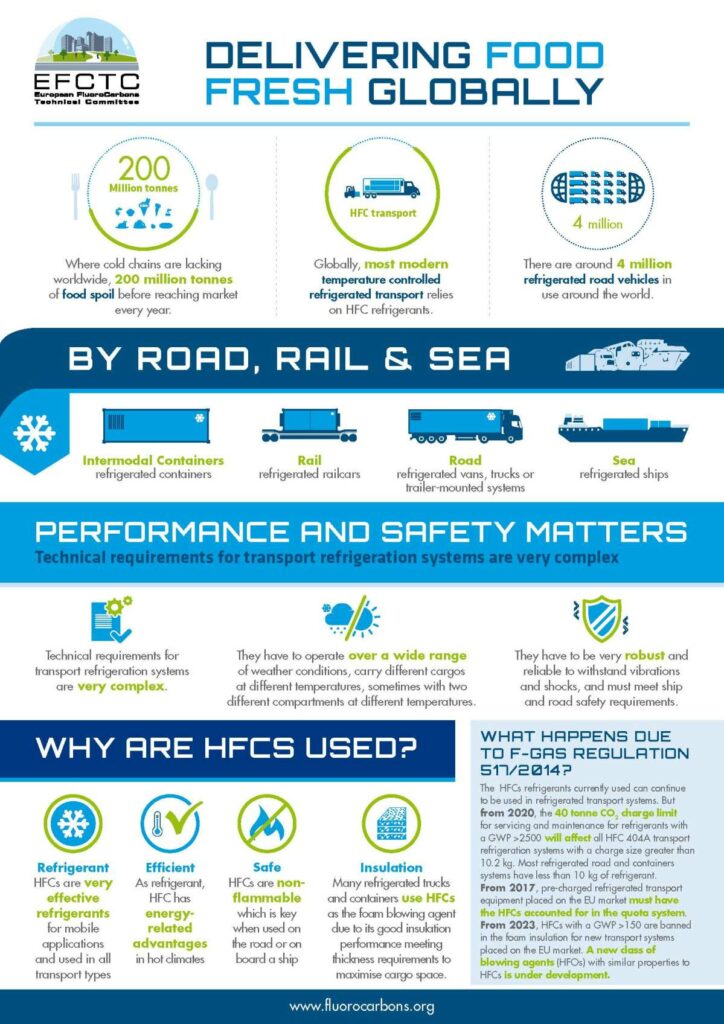
Delivering Food Fresh Globally
Globally, most modern temperature controlled refrigerated transport relies on HFC refrigerants....
Infographics
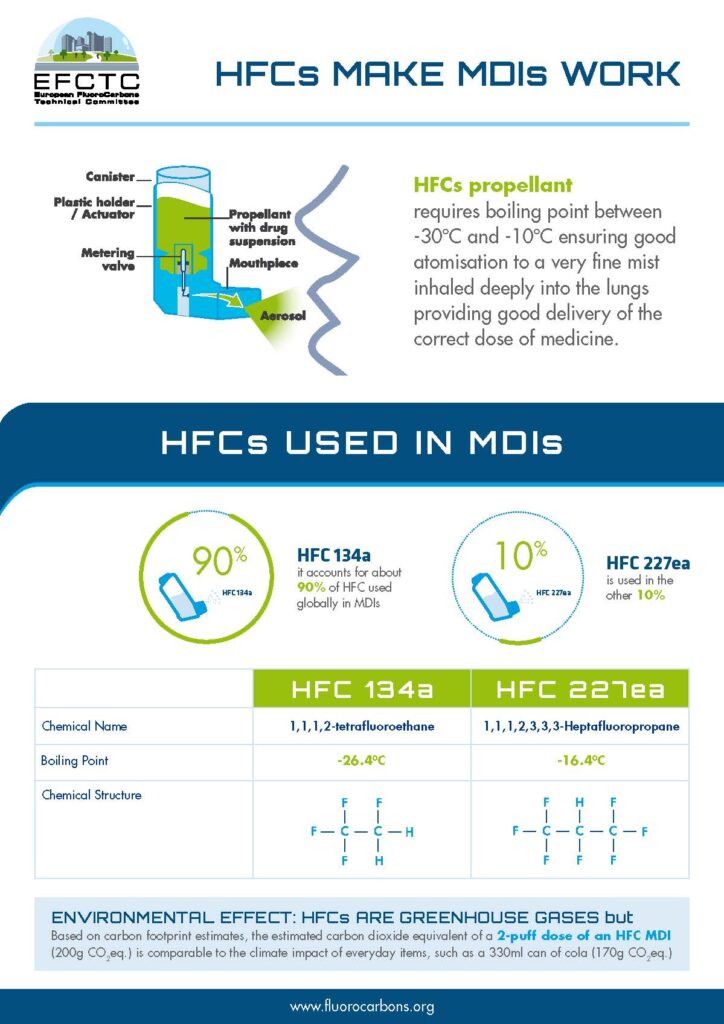
HFCs Make MDIs Work
HFC propellant requires boiling point between -30°C and -10°C ensuring good atomisation to a very fine mist inhaled deeply into the lungs providing good delivery of the correct dose of medicine....
Learn About
EFCTC Position Papers
EFCTC welcomes options for proposed measures to improve the enforcement of the F-gas Regulation
Participating in the Stakeholder workshop held on 6 May, the European Fluorocarbon Technical Committee (EFCTC) welcomed the proposal for the revision of the F-Gas Regulation which will be released by...
Refrigerant safety
EFCTC Position Papers
EFCTC Response to Refolution Report on HFOs and degradation product
EFCTC Response to “Report and statement of the downsides of HFO refrigerant usage - Impact of fluorochemical refrigerants and their degradation products on the environment and health” by Refolutio...
Infographics
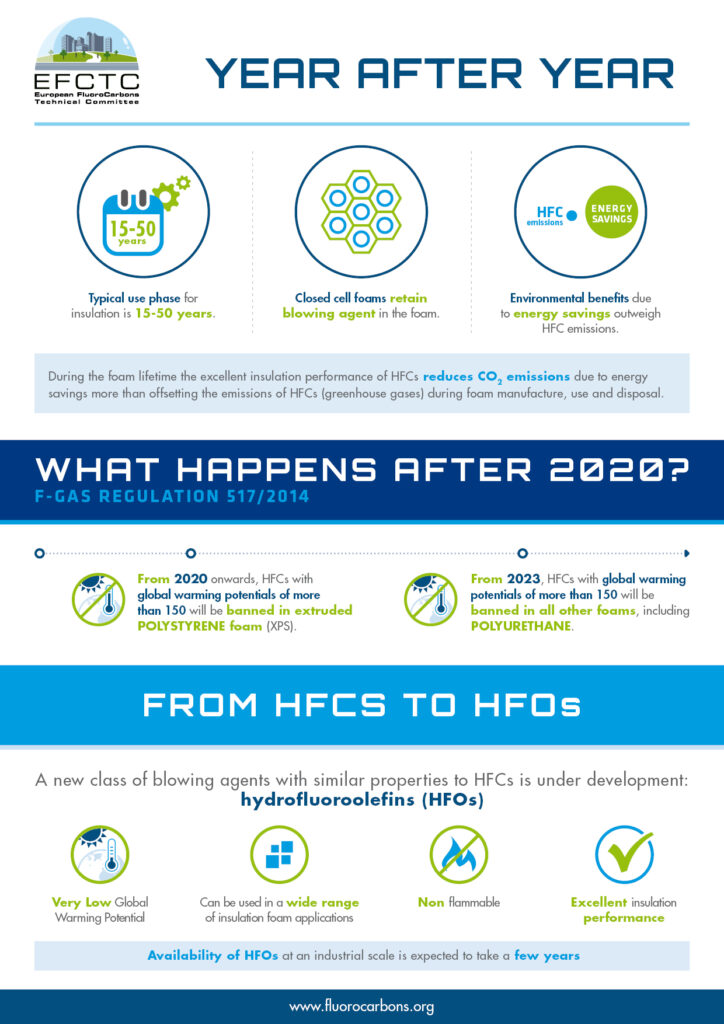
YEAR AFTER YEAR
During the foam lifetime the excellent insulation performance of HFCs reduces CO2 emissions due to energy savings more than offsetting the emissions of HFCs (greenhouse gases) during foam m...
Illegal Trade
Reports to the EFCTC Action Line of illegal HFC trade lead to criminal investigations
Illegal trade in hydrofluorocarbons (HFCs) is threatening legitimate small businesses, financing organised crime, and ultimately the climate. The European FluoroCarbons Technical Committee (EFCTC) Act...
Infographics
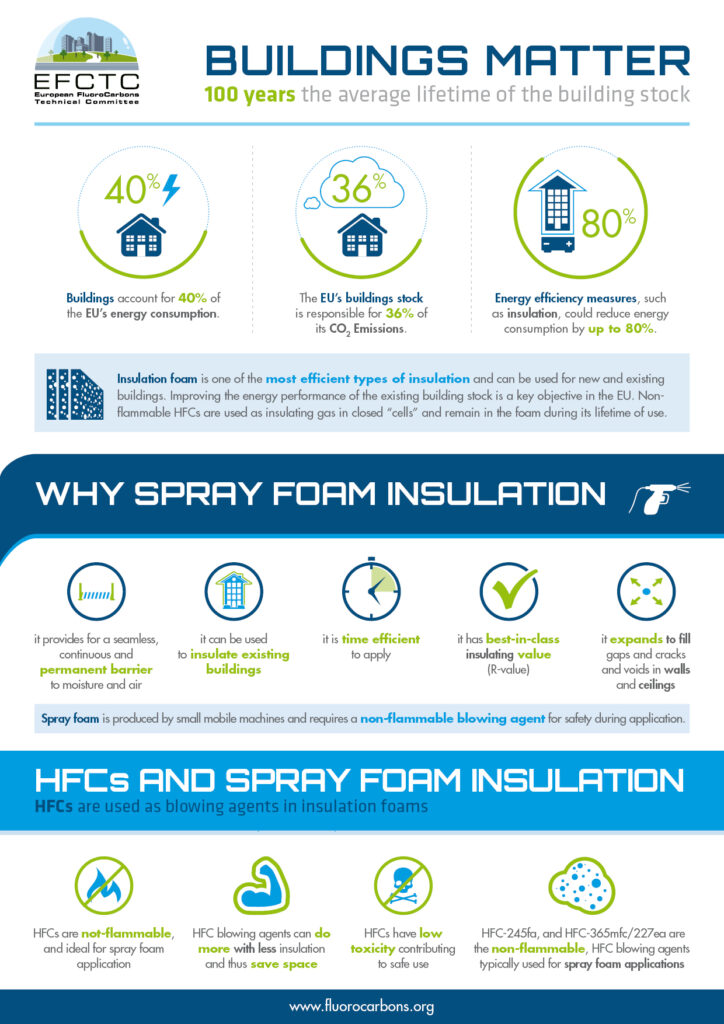
BUILDINGS MATTER
Insulation foam is one of the most efficient types of insulation and can be used for new and existing buildings. Improving the energy performance of the existing building stock is a key objective in t...
Infographics
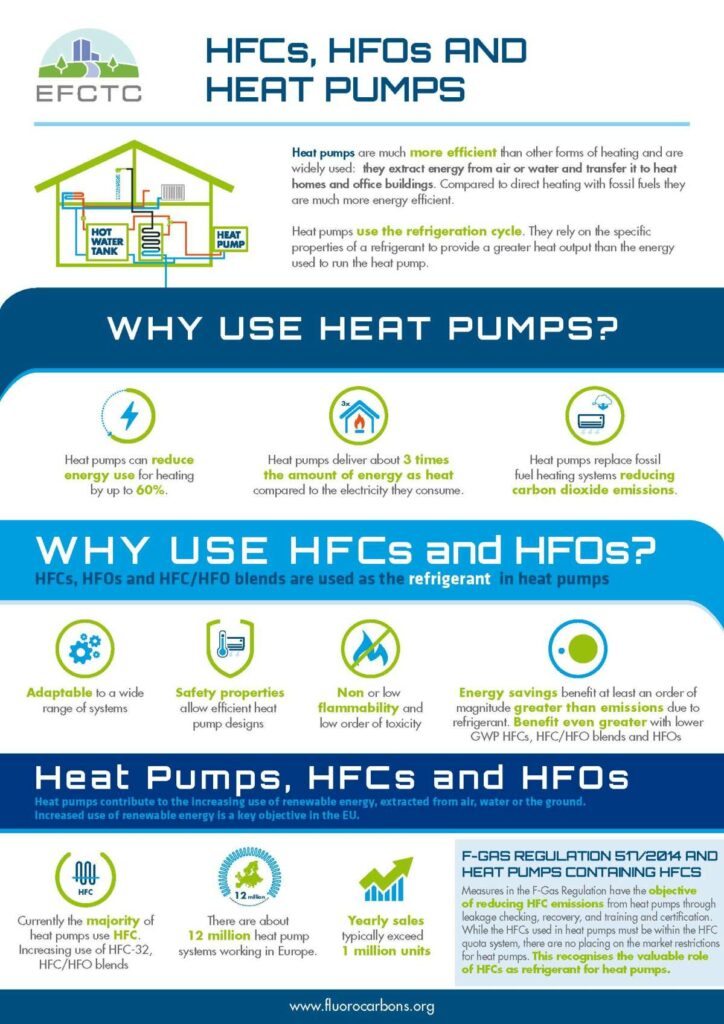
HFCs AND HEAT PUMPS
Heat pumps are much more efficient than other forms of heating and are widely used: they extract energy from air or water and transfer it to heat homes and office buildings. Compared to direct heating...